

Introduction
Investing is one of the most effective ways to build wealth and achieve financial security. While there are numerous investment options available, including stocks, mutual funds, bonds, and cryptocurrencies, real estate continues to be one of the most reliable and rewarding long-term investments. For generations, real estate has been a preferred asset class because of its ability to generate consistent returns, provide financial stability, and create long-term wealth.
Unlike many other investments that can be highly volatile, real estate offers tangible value and multiple avenues for income generation. Whether you are purchasing a residential property, commercial space, rental apartment, or investment plot, real estate has the potential to deliver significant financial benefits over time.
This article explores why real estate remains one of the best long-term investment options and how it can help investors achieve their financial goals.
Wealth Generation Through Asset Appreciation
One of the primary reasons people invest in real estate is the potential for property appreciation. Over time, property values tend to increase due to factors such as urban development, population growth, infrastructure improvements, and economic expansion.
When you purchase a property in a growing area, its market value often rises significantly over the years. This appreciation enables investors to build wealth without actively managing their investment on a daily basis.
For example, areas that experience new highways, metro connectivity, business hubs, and educational institutions often witness rapid growth in property values. Investors who enter these markets early can benefit from substantial appreciation over the long term.
Unlike depreciating assets such as vehicles, real estate generally becomes more valuable over time, making it an effective wealth-building tool.
Rental Income Creates Passive Cash Flow
Another major advantage of real estate investing is the ability to generate passive income through rentals. Residential apartments, villas, office spaces, retail outlets, and commercial properties can provide a steady stream of monthly income.
Rental income offers several benefits:
- Regular monthly cash flow
- Financial security during economic fluctuations
- Additional income source alongside employment
- Opportunity to reinvest earnings into new properties
As rental demand continues to grow in urban areas, property owners can benefit from increasing rental yields over time. Rental income not only covers maintenance expenses and loan repayments but can also generate positive cash flow.
For many investors, rental properties serve as a reliable source of long-term financial stability and retirement income.

Portfolio Diversification
Diversification is a key principle of successful investing. Relying entirely on one asset class can increase financial risk. Real estate provides an excellent way to diversify an investment portfolio and reduce overall exposure to market volatility.
Stock markets can experience significant fluctuations due to economic conditions, political events, and investor sentiment. Real estate, on the other hand, tends to be more stable and less susceptible to short-term market movements.
By including real estate alongside stocks, mutual funds, and other investments, investors can create a balanced portfolio that offers both growth and stability. Diversification helps protect wealth during uncertain economic periods and improves long-term financial resilience.
Tax Benefits for Property Owners
Real estate investments often come with attractive tax advantages that can improve overall returns. Governments in many countries provide tax incentives to encourage property ownership and investment.
Common tax benefits may include:
Home Loan Interest Deductions
Property owners can often claim deductions on interest paid toward home loans.
Principal Repayment Benefits
Loan principal repayments may qualify for tax deductions under applicable regulations.
Depreciation Benefits
Commercial property owners can claim depreciation expenses, reducing taxable income.
Capital Gains Benefits
Certain tax exemptions and benefits may apply when reinvesting profits from property sales.
These tax advantages can significantly improve the profitability of real estate investments and help investors retain more of their earnings.
Appreciation Value Increases Over Time
Appreciation value is one of the strongest reasons why real estate is considered a long-term investment. As cities expand and infrastructure improves, property demand typically rises.
Several factors contribute to appreciation:
Infrastructure Development
New roads, airports, metro systems, and commercial centers increase property demand.
Economic Growth
Growing employment opportunities attract more residents and businesses.
Population Growth
Increasing population creates greater housing demand.
Urban Expansion
Emerging suburbs and growth corridors often experience rapid appreciation.
Investors who purchase properties in strategically located areas can benefit from significant increases in property value over the years.
Protection Against Inflation
Inflation reduces the purchasing power of money over time. One of the unique advantages of real estate is its ability to act as a hedge against inflation.
As inflation increases:
- Property values generally rise.
- Rental income often increases.
- Construction costs increase, boosting existing property values.
This means real estate investments tend to maintain or even increase their value during inflationary periods, helping investors preserve their wealth.
Compared to cash savings, which lose value due to inflation, real estate provides a more effective method of protecting purchasing power.
Tangible and Secure Asset
Unlike stocks or digital assets, real estate is a physical asset that provides intrinsic value. Investors can see, use, improve, and manage their property.
This tangible nature provides several advantages:
- Greater sense of ownership
- Physical control over the asset
- Ability to improve property value through renovations
- Long-term security
Even during market downturns, real estate retains its utility and value because people always need homes, offices, and commercial spaces.
Leverage Enhances Investment Potential
Real estate allows investors to use leverage through financing options such as home loans and commercial property loans. This enables individuals to acquire valuable assets without paying the full purchase price upfront.
For example, an investor may purchase a property worth ₹1 crore with a smaller down payment while financing the remaining amount. As the property appreciates, the investor benefits from the growth of the entire asset value rather than just the initial investment.
Leverage can significantly increase returns when used responsibly and strategically.
Long-Term Financial Security
Real estate provides a sense of financial stability that many other investments cannot offer. Property ownership creates a valuable asset base that can support future financial goals, including:
- Children’s education
- Retirement planning
- Business expansion
- Wealth transfer to future generations
Many successful investors build long-term wealth through real estate because it combines appreciation, rental income, tax benefits, and stability in a single investment vehicle.
Conclusion
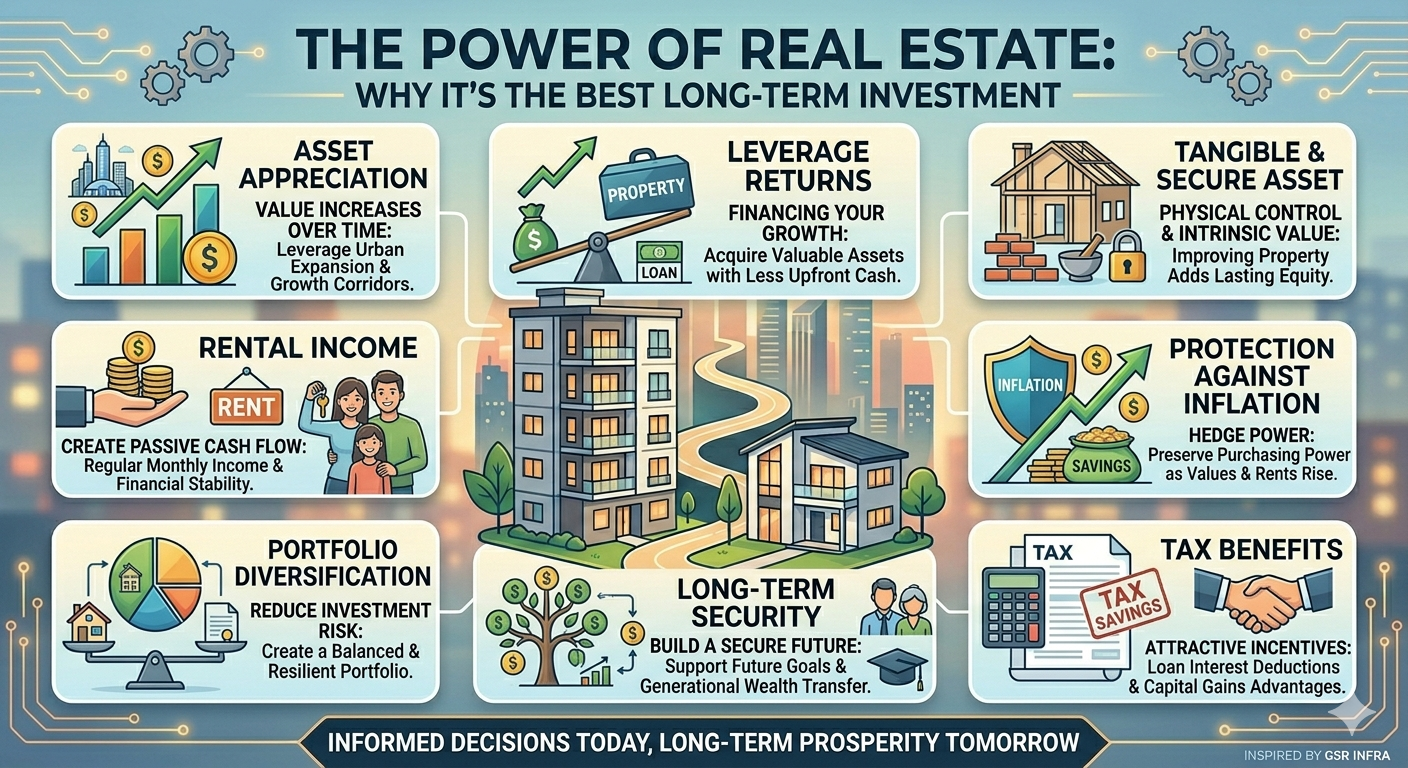
Real estate continues to be one of the most effective long-term investment options for individuals seeking financial growth, stability, and wealth creation. Through property appreciation, rental income, portfolio diversification, tax benefits, inflation protection, and long-term security, real estate offers multiple advantages that few other asset classes can match.
While every investment carries some level of risk, careful research, proper planning, and strategic property selection can significantly improve investment outcomes. Choosing properties in high-growth locations with strong infrastructure and future development potential can maximize returns and create lasting value.
At GSR INFRA, we believe that real estate is more than just an investment—it is a pathway to financial independence and long-term prosperity. By making informed decisions today, investors can build a stronger and more secure future through the power of real estate.